

The columns whose slenderness ratio is less than 80, are known as
A. Short columns
B. Long columns
C. Weak columns
D. Medium columns
Answer: Option A
Solution (By Examveda Team)
* Slenderness Ratio: This is a way to measure how likely a column is to buckle (bend sideways) under a load. It's calculated by dividing the column's effective length by its least radius of gyration.* Short Columns: These are columns that are relatively stocky. They tend to fail due to crushing (the material being squeezed) rather than buckling.
* Long Columns: These are columns that are relatively slender. They are more likely to buckle under load.
* Medium Columns:These columns behaviour lies between short and long columns.
* General Rule: A common rule of thumb is that columns with a slenderness ratio less than 80 are generally classified as short columns. They primarily fail due to compressive stresses exceeding the material's yield strength.
* Weak Columns: This term isn't directly related to slenderness ratio in the same defining way as short or long columns. A weak column could be weak due to material properties or manufacturing defects, regardless of its slenderness ratio.
Therefore, a slenderness ratio less than 80 indicates a short column that's prone to crushing rather than buckling.
Join The Discussion
Comments (2)
Related Questions on Strength of Materials in ME
A. Equal to
B. Less than
C. Greater than
D. None of these
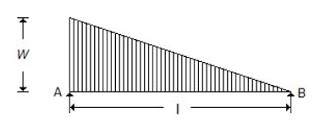
A. $$\frac{{{\text{w}}l}}{6}$$
B. $$\frac{{{\text{w}}l}}{3}$$
C. $${\text{w}}l$$
D. $$\frac{{2{\text{w}}l}}{3}$$
The columns whose slenderness ratio is less than 80, are known as
A. Short columns
B. Long columns
C. Weak columns
D. Medium columns
Medium column
It should be medium columns