ExamVeda
Login
Home
21
Compression members always tend to buckle in the direction of the
Discuss
Answer & Solution
Answer: Option D
No explanation is given for this question. Let's Discuss on Board
22
A vertical column has two moments of inertia (i.e. Ixx and Iyy ). The column will tend to buckle in the direction of the
Discuss
Answer & Solution
Answer: Option D
No explanation is given for this question. Let's Discuss on Board
23
The torsional rigidity of a shaft is expressed by the
Discuss
Answer & Solution
Answer: Option D
No explanation is given for this question. Let's Discuss on Board
24
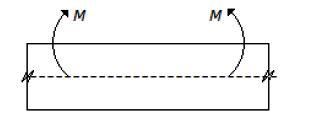
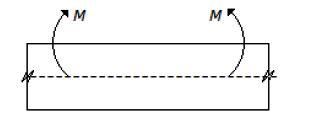
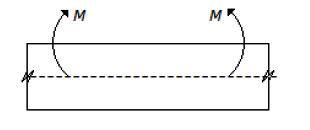
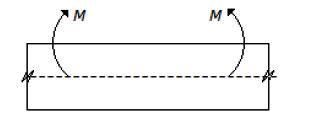
The layer at the center of gravity of the beam as shown in the below figure, will be
Strength of Materials mcq question image
Discuss
Answer & Solution
Answer: Option C
Solution:
Strength of Materials mcq solution image
25
The lower layer of the beam as shown in the below figure, will be
Strength of Materials mcq question image
Discuss
Answer & Solution
Answer: Option A
Solution:
Strength of Materials mcq solution image
26
The value of Poisson's ratio for cast iron is
Discuss
Answer & Solution
Answer: Option B
Solution:
Poisson's ratio: It is the ratio of lateral strain to longitudinal strain when a material is subjected to axial loading.

Value for cast iron: For cast iron, Poisson's ratio typically ranges between 0.23 and 0.27, depending on its composition and grade.

Reason: Cast iron exhibits brittle behavior and has a lower Poisson's ratio compared to ductile materials, which tend to have higher values. The lower range of Poisson's ratio reflects the limited lateral expansion in cast iron under axial compression or tension.

Significance: Understanding the Poisson's ratio of cast iron is crucial for analyzing its deformation characteristics and ensuring its appropriate use in engineering applications, such as engine blocks and machine parts.
27
The capacity of a strained body for doing work on the removal of the straining force, is called
Discuss
Answer & Solution
Answer: Option B
No explanation is given for this question. Let's Discuss on Board
28
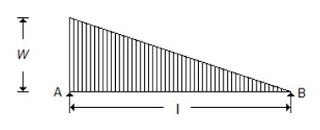
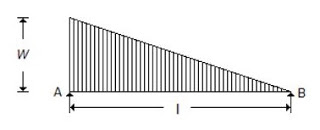
The maximum bending moment for the beam shown in the below figure, lies at a distance of ________ from the end B.
Strength of Materials mcq question image
Discuss
Answer & Solution
Answer: Option D
Solution:
Strength of Materials mcq solution image
29
Hook's law holds good up to
Discuss
Answer & Solution
Answer: Option B
No explanation is given for this question. Let's Discuss on Board
30
Hooke's law holds good up to
Discuss
Answer & Solution
Answer: Option B
Solution:
Hooke's law is a fundamental principle in mechanics that states that the strain in a material is directly proportional to the applied stress, provided the material's elastic limit is not exceeded.

Limit of Proportionality: This is the point up to which Hooke's law is valid. Beyond this limit, the material will not follow the linear relationship between stress and strain, as it starts to experience non-linear deformation.

Yield Point: This is the point where the material begins to deform plastically. While Hooke's law is valid up to this point, it is specifically associated with the limit of proportionality, which is slightly before the yield point.

Breaking Point: This is the point at which the material fails and breaks. Hooke's law does not apply here as the material has surpassed its elastic limit.

Elastic Limit: This is the maximum extent to which a material can be stretched or compressed and still return to its original shape. Hooke's law is valid up to the elastic limit, but the term "limit of proportionality" is more precise for this specific context.