
ExamVeda
Login
Home
21
Match the stages of Process of Organisational Change (List-I) with their possible descriptions (List-II) given below.
List-I List-II
a. Diagnosis 1. The stage for framing a proposal in relation to the problems or issues identified
b. Stabilisation 2. The attempt to search for the main cause underlying the symptoms encountered
c. Motivation 3. The stage where people are involved in detailed consideration of the proposed change
d. Action Proposal 4. The stage of internalising the change and making it a part of the organisation's normal life
Discuss
Answer & Solution
Answer: Option D
No explanation is given for this question. Let's Discuss on Board
22
People dislike work and seek to avoid it at all costs' applies to which organisational behaviour theory?
Discuss
Answer & Solution
Answer: Option B
Solution:
Theory X is a concept developed by Douglas McGregor in the 1960s, which assumes that people generally dislike work and will avoid it whenever possible. According to this theory, managers need to closely supervise and control employees because they are inherently lazy, unmotivated, and need to be directed.

In contrast, Theory Y suggests that employees are naturally motivated, enjoy work, and seek responsibility. Therefore, they can be trusted to work independently and contribute positively to the organization.

The Hawthorne Effect refers to the change in behavior of workers when they are aware they are being observed, rather than their inherent attitude towards work.

Theory X highlights the need for control and authority due to the belief that individuals prefer to avoid work.
23
Perception is
Discuss
Answer & Solution
Answer: Option D
No explanation is given for this question. Let's Discuss on Board
24
Fayol attempted to develop
Discuss
Answer & Solution
Answer: Option B
No explanation is given for this question. Let's Discuss on Board
25
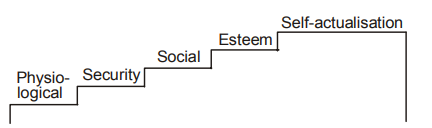
Given:
Organizational Behavior and Design mcq question image
The figure represents . . . . . . . . Theory of Motivation.
Discuss
Answer & Solution
Answer: Option A
No explanation is given for this question. Let's Discuss on Board
26
Match the following:
List-I (Organisational Behaviour Theory) List-II (Developers)
a. Comparative theory 1. Arnest Del
b. System theory 2. Bemard
c. Decision theory 3. Herbert Siamon
d. Fusion process theory 4. Backkey and Kricks
Discuss
Answer & Solution
Answer: Option A
No explanation is given for this question. Let's Discuss on Board
27
OD Cube (Sehmuck and Miles), Consulcube (Blake and Mouton) and Four Quadrants (French and Bell) are the examples of
Discuss
Answer & Solution
Answer: Option C
No explanation is given for this question. Let's Discuss on Board
28
Which of the following is/are importance of Motivation?
Discuss
Answer & Solution
Answer: Option D
No explanation is given for this question. Let's Discuss on Board
29
Match the following:
List-I (Type of Stresses) List-II (Examples)
a. Intra-Personal 1. Nature of job
b. Job Related 2. Group processes
c. Inter-Personal 3. Role conflict
d. Inter-Organisational 4. Noise
Discuss
Answer & Solution
Answer: Option C
No explanation is given for this question. Let's Discuss on Board
30
In Vroom's Expectancy Theory, Valence means
Discuss
Answer & Solution
Answer: Option A
No explanation is given for this question. Let's Discuss on Board